Experiences · KOGGALA LAKE, SOUTHERN, SRI LANKA
The man who knows this coast better than anyone will take you somewhere the guidebooks can’t.
The coast of Southern Sri Lanka looks beautiful from a car window. Naveen will make you want to get out of the car.
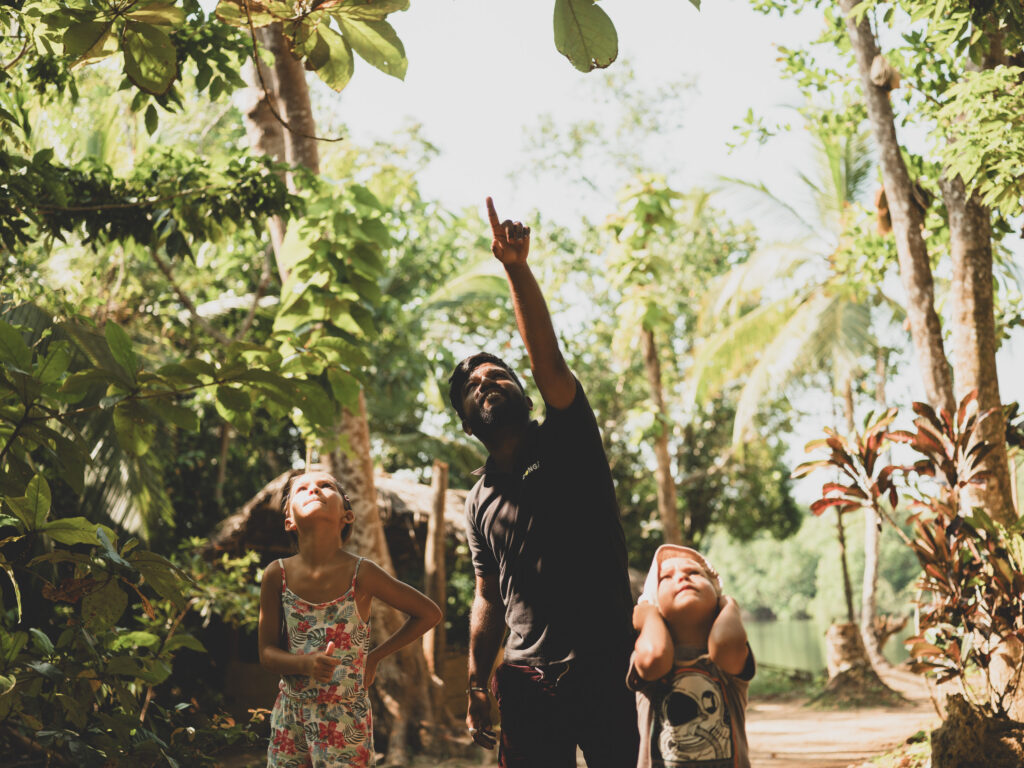
Naveen’s job is to take you there, and to introduce you properly when you arrive.
The coast of Southern Sri Lanka looks beautiful from a car window. Naveen will make you want to get out of the car.
This tour — offered through Donga Tours, one of the most trusted operators on the south coast — is built around a single honest idea: that the things Sri Lanka is famous for (the tea, the cinnamon, the fish, the coast) all come from somewhere, and that somewhere is worth understanding.
Koggala lake and Sam’s boat
Then, Koggala.
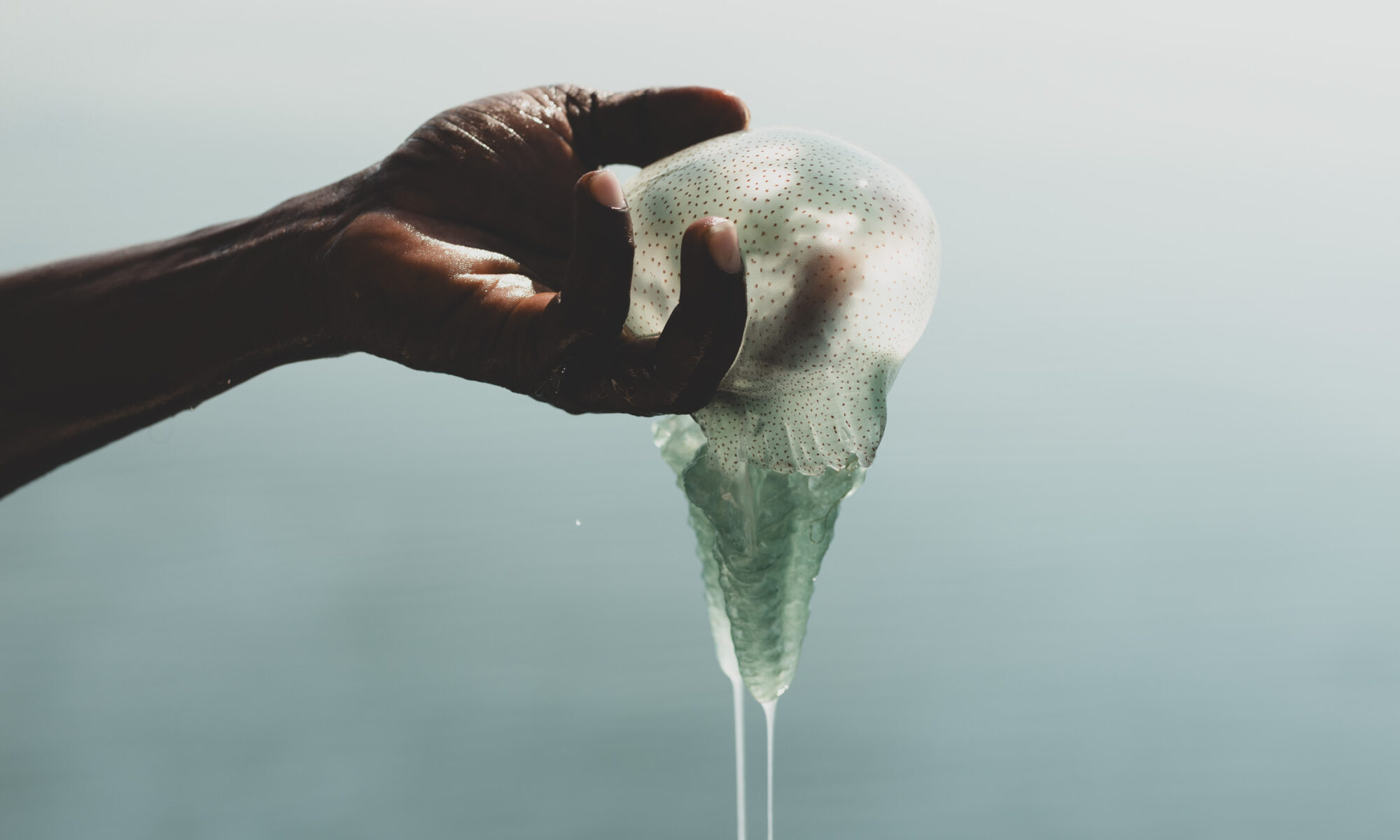
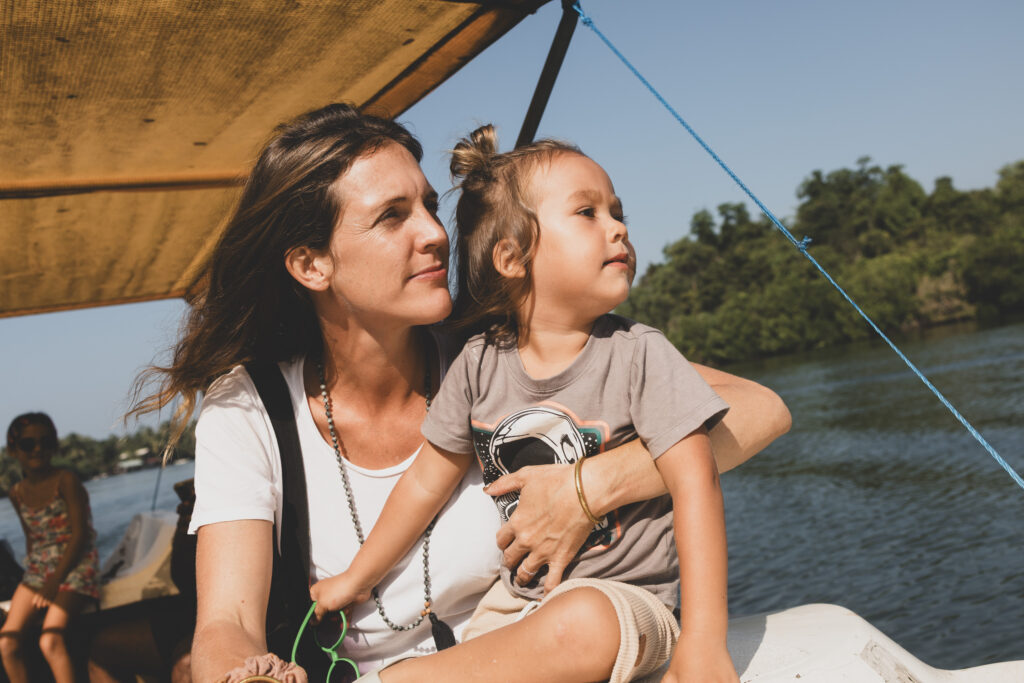
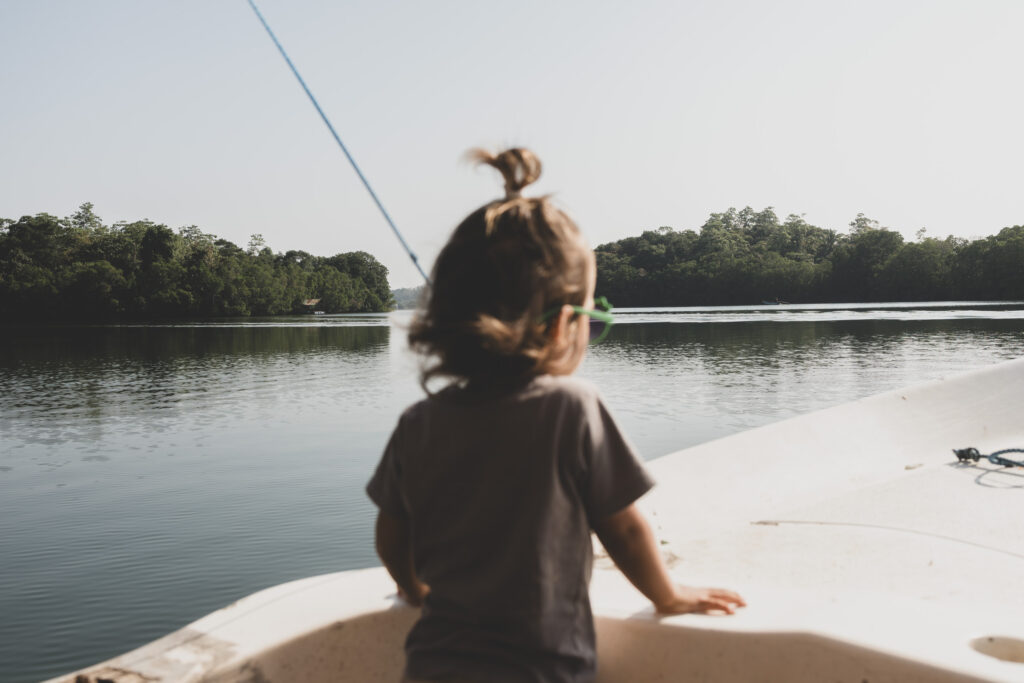
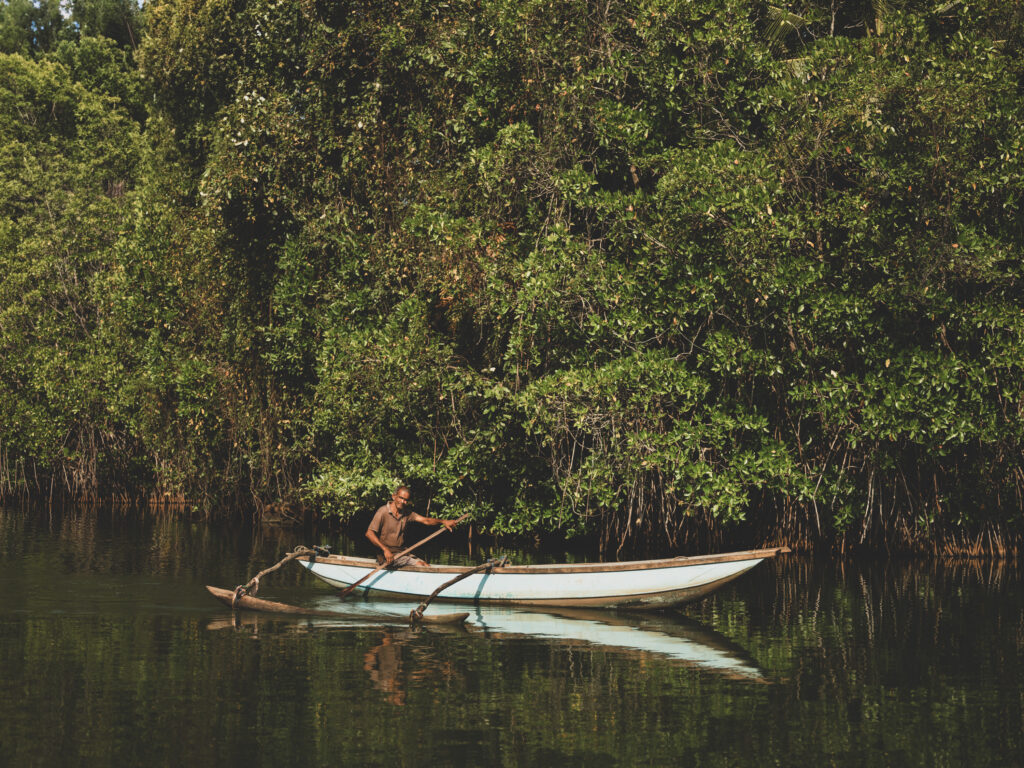
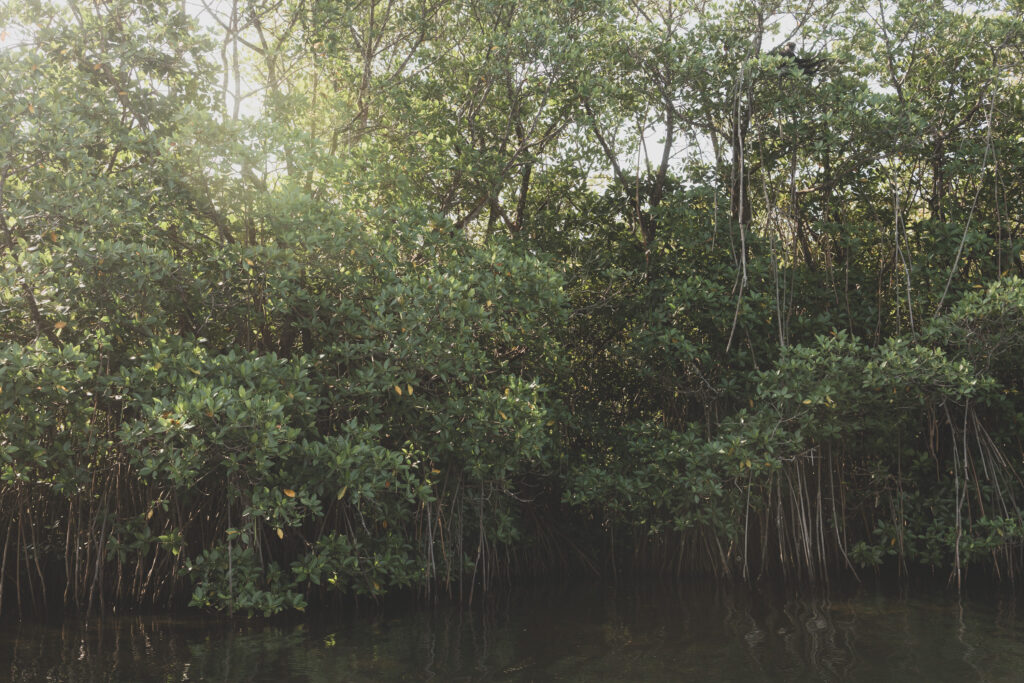
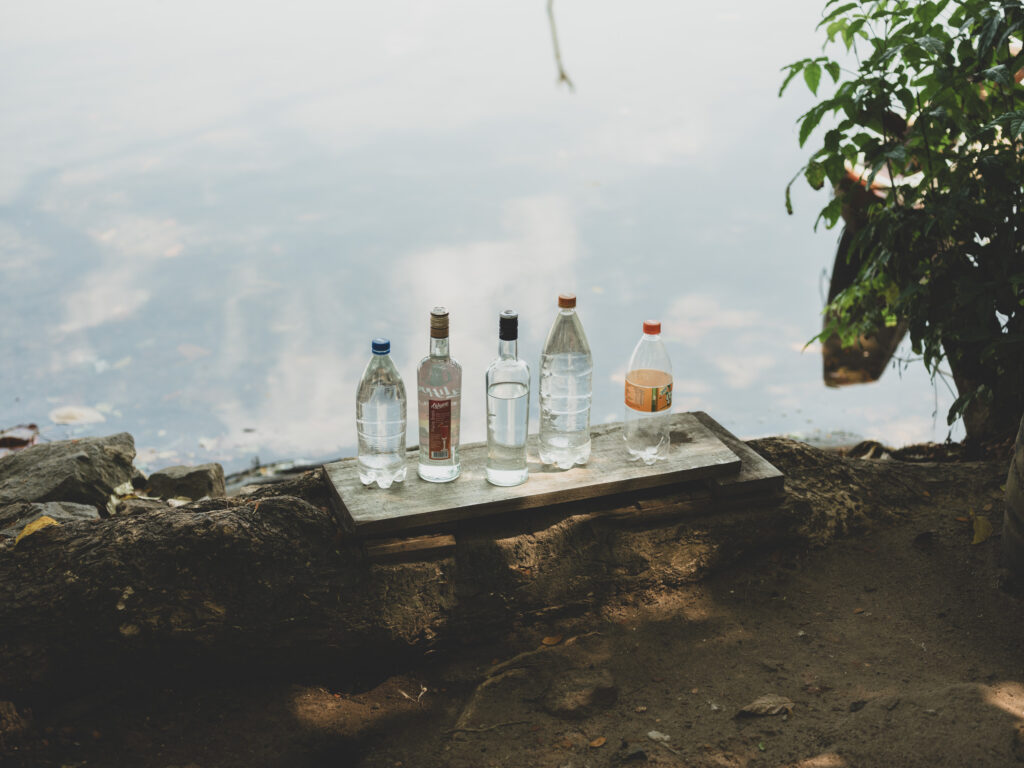
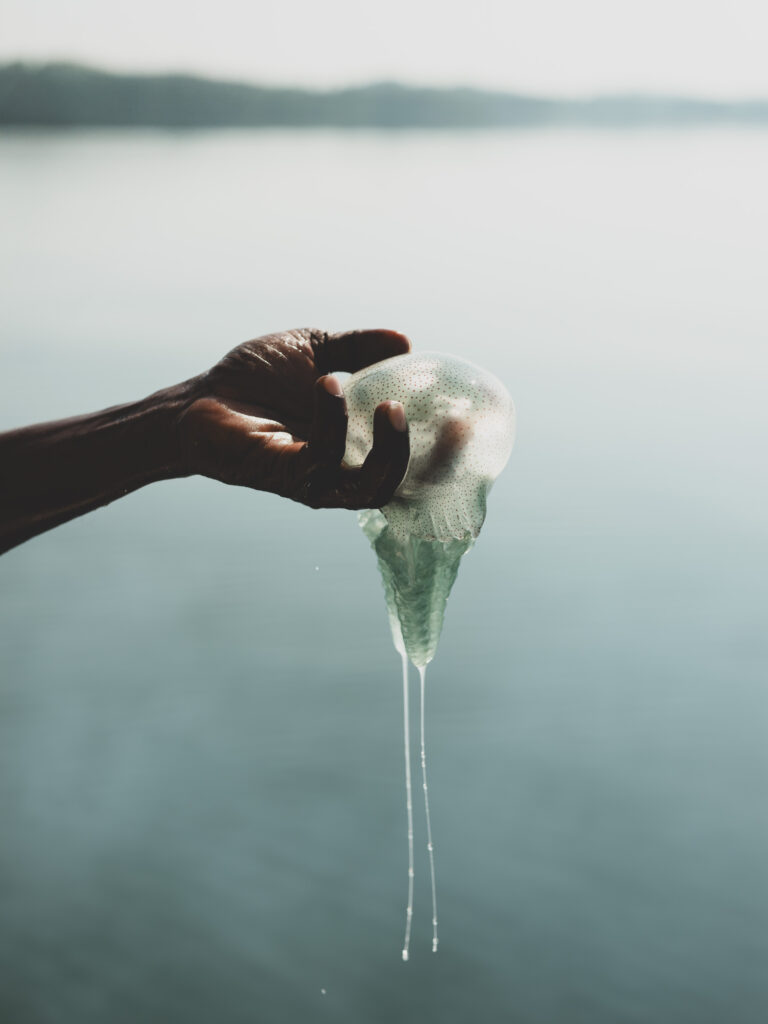
The lake sits just inland from the coast — a wide, calm stretch of water surrounded by mangroves and dotted with small islands, where the mix of fresh and salt water has created an ecosystem that most visitors to Sri Lanka never see. You board Sam’s boat at a a small bridge leading to an island temple. Within minutes the road, the noise and the tourist coast have all disappeared.
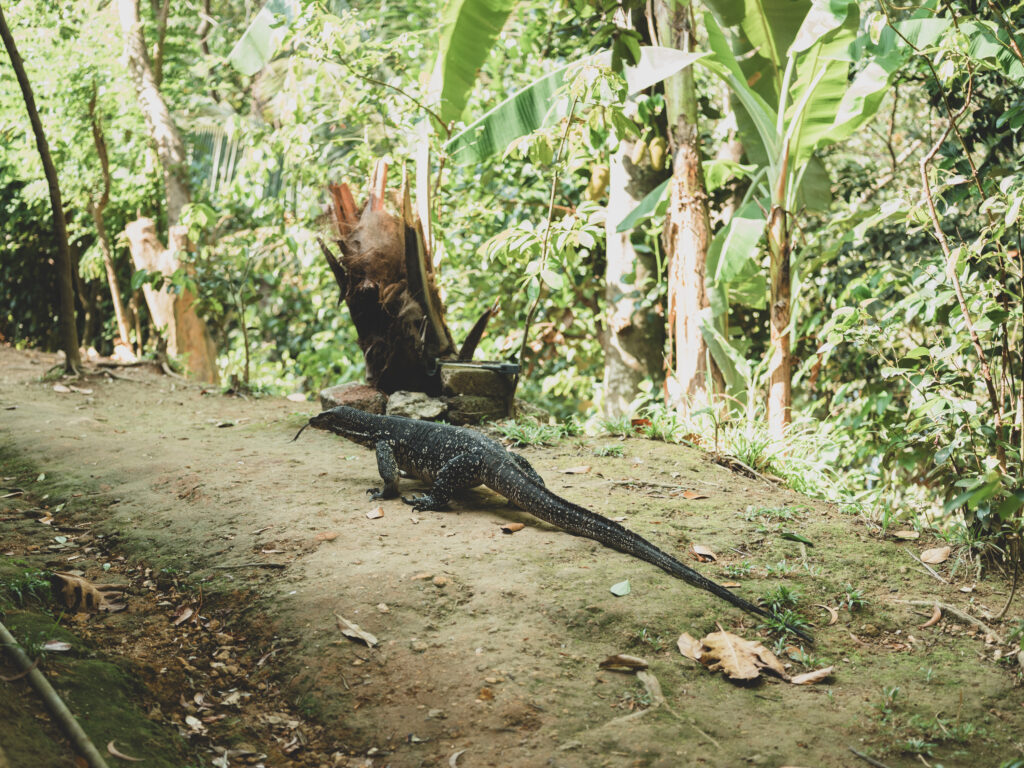
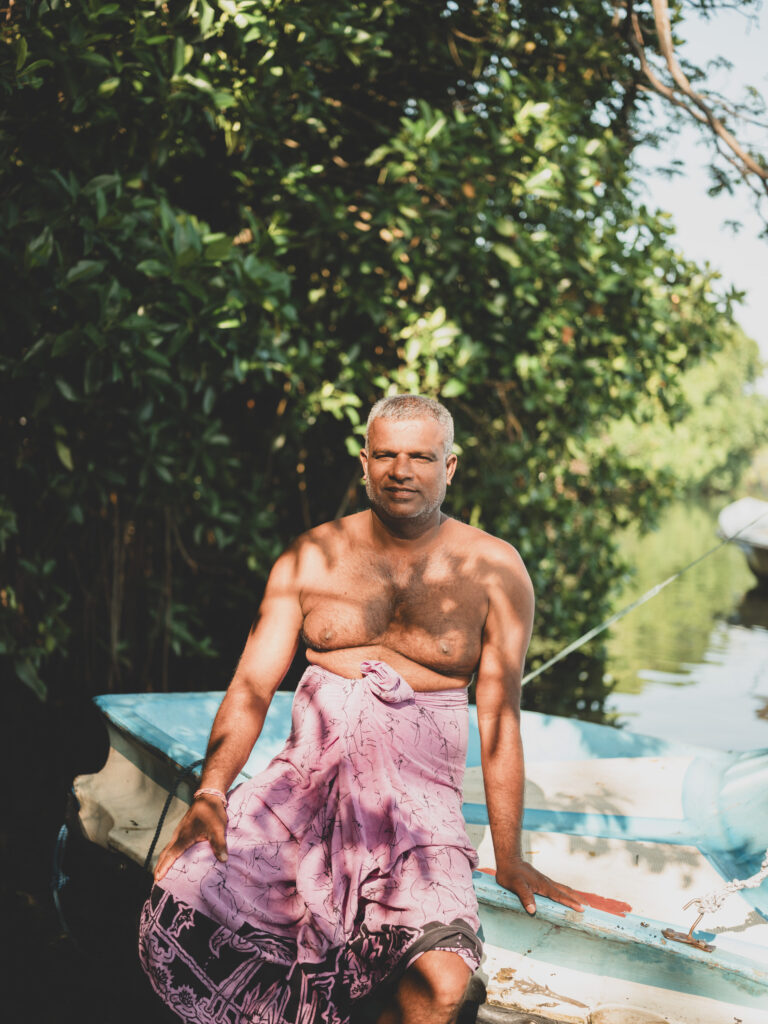
Sam navigates with the quiet confidence of someone who has done this his entire life. He cuts the engine near the mangroves when there is something worth seeing — monkeys in the canopy, a monitor lizard on a low branch, a kingfisher doing something brief and extraordinary above the water. He knows where the crocodiles rest in the heat of the day. He knows which birds call which islands home. He explains it all and Naveen translates word by word and adds context for the western mind.
The children were silent in a way they almost never are. Not bored — held.
Cinnamon island
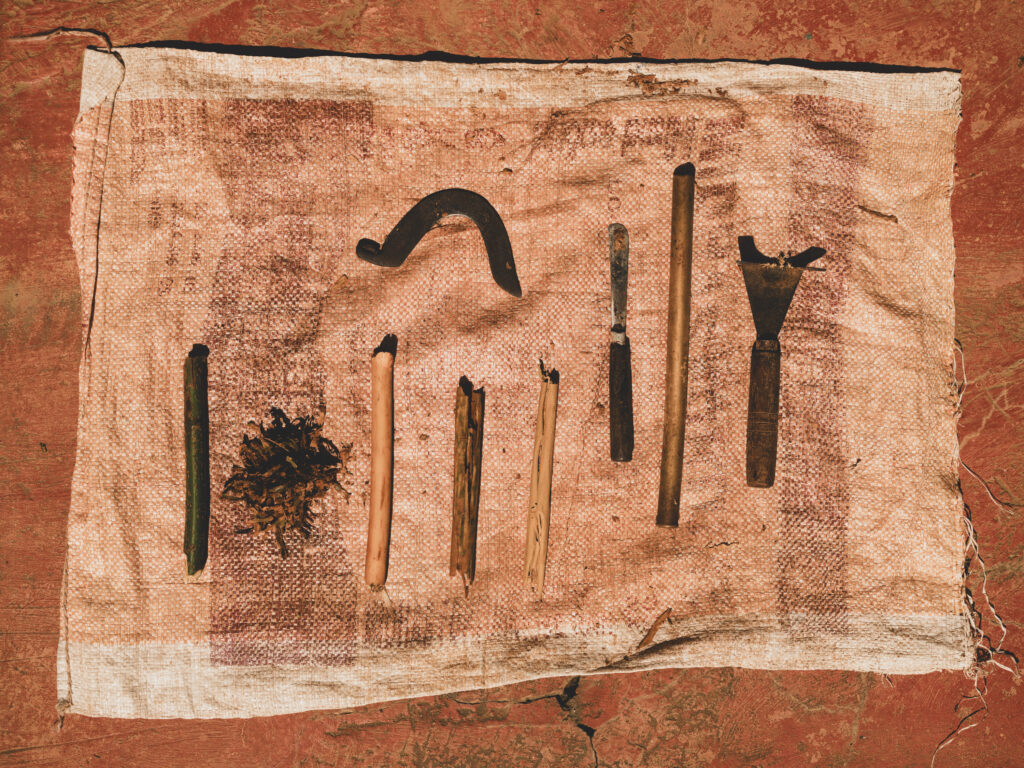
The boat moors at a jetty that is essentially a few boards on barrels, and you walk ashore onto Cinnamon Island — one of the small inhabited islands in the middle of the lake where only four families live, and the only crop is cinnamon. Sam’s father is here. He is preparing cinnamon for sale: stripping bark from trees, rolling it by hand into the quills that end up in supermarkets and spice jars across the world. He hands you a leaf to smell. Then a piece of fresh bark. The smell is nothing like what you buy in a jar. It is warmer, more complex, closer to something alive than something dried.
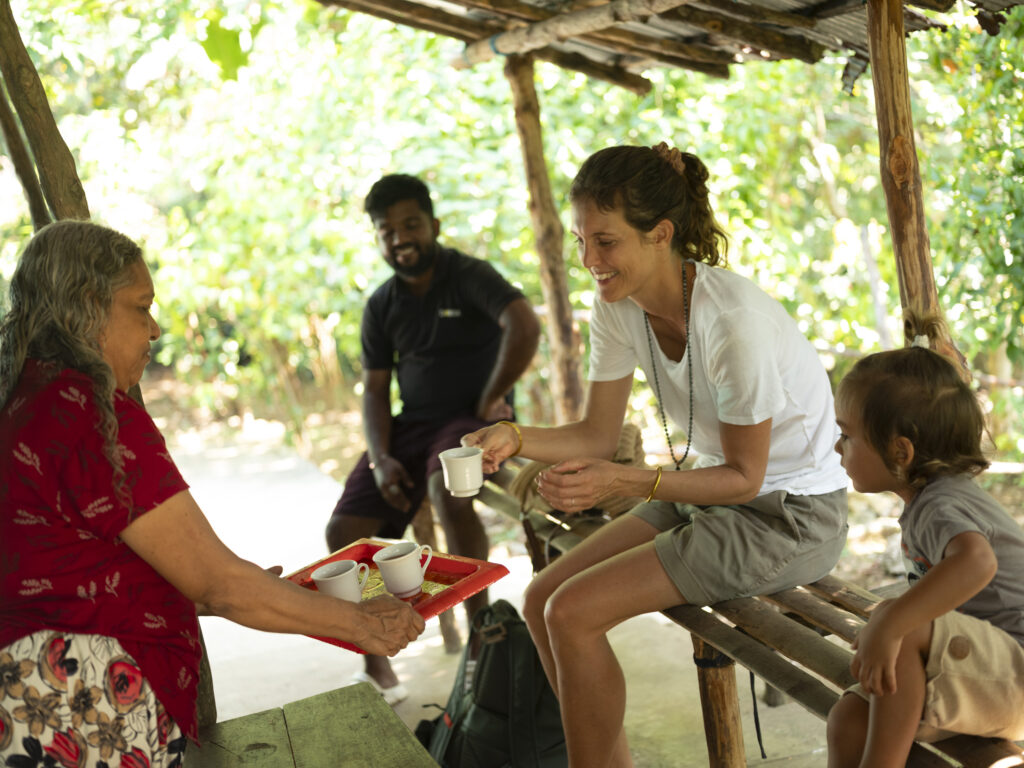
A cup of cinnamon tea follows. You drink it standing in the shade while the children investigate the trees and the lake glitters beyond the island’s edge. It is one of those moments that doesn’t announce itself as significant. It just is.
The fishermen
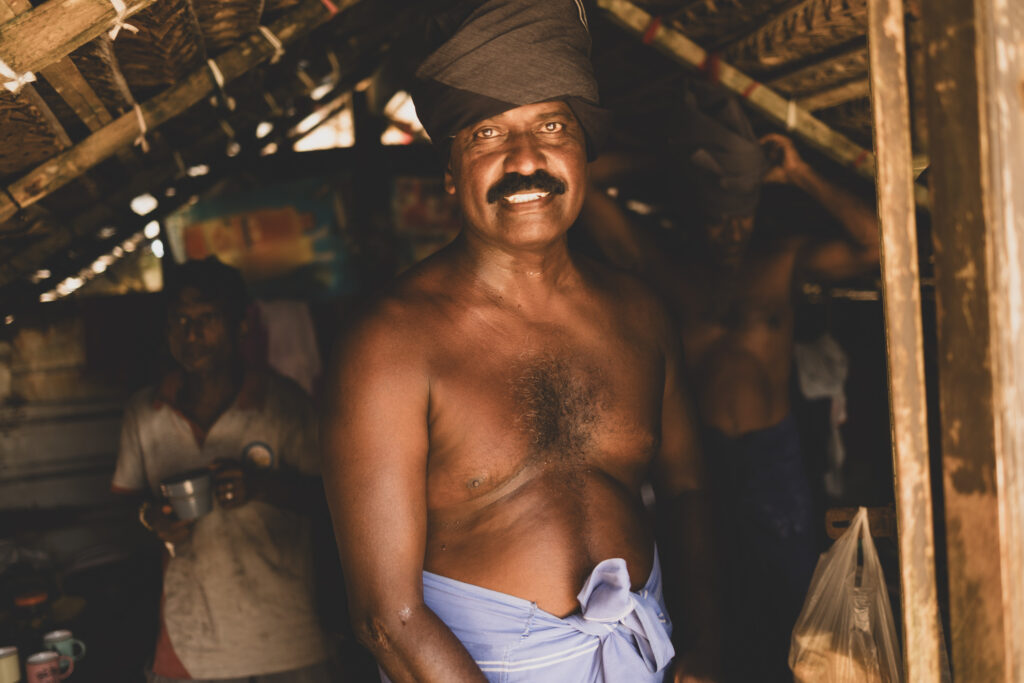
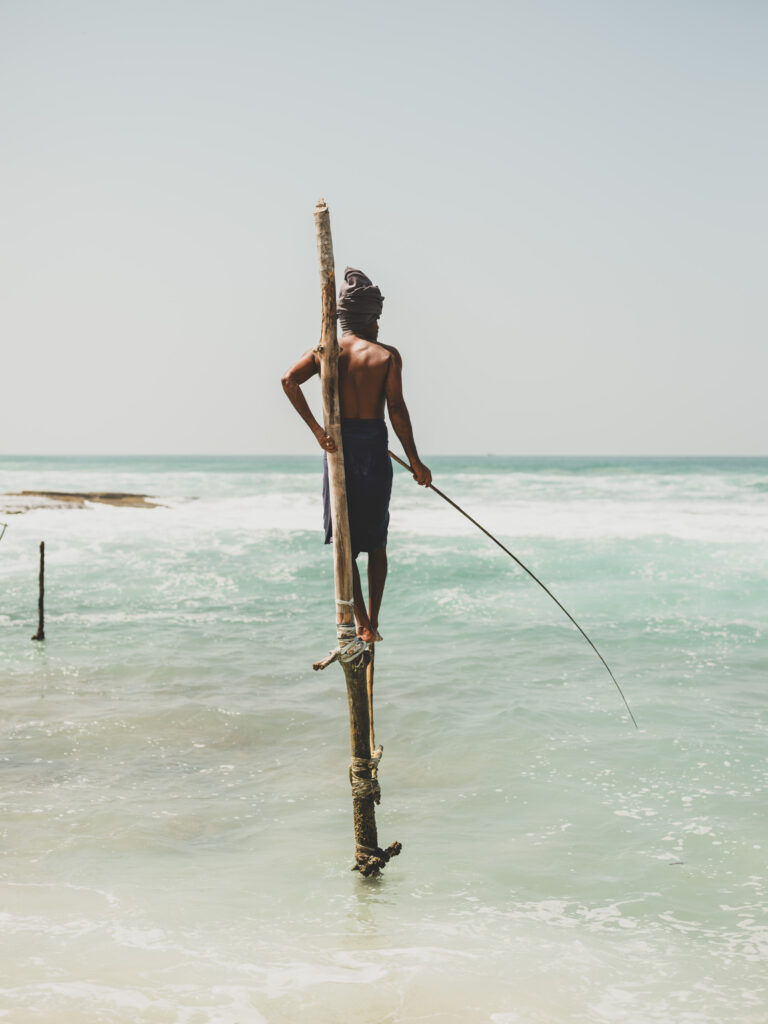
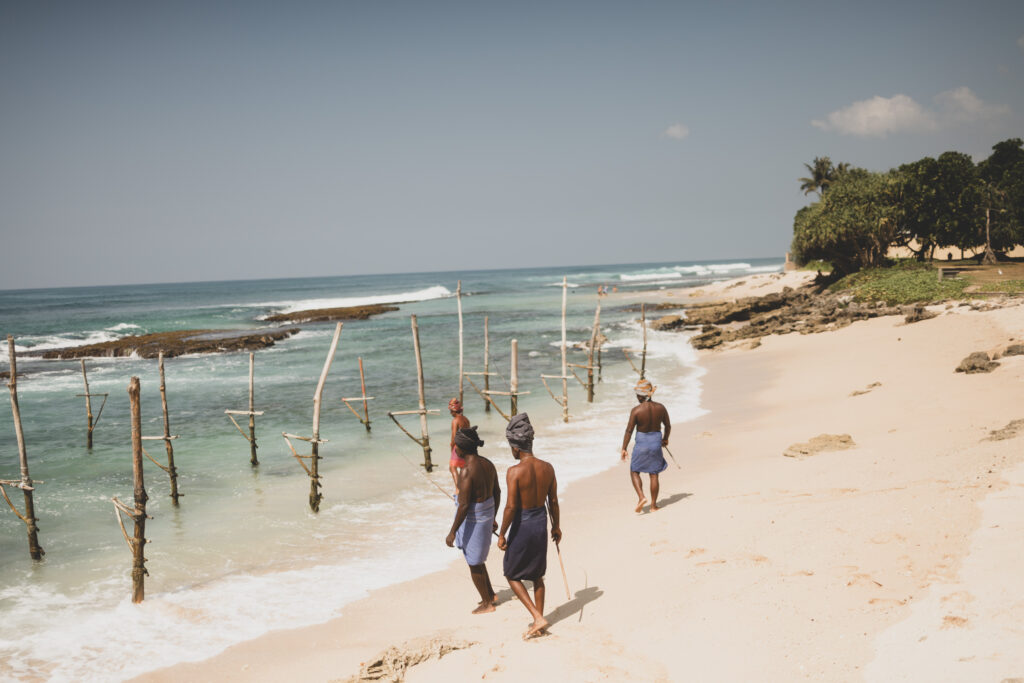
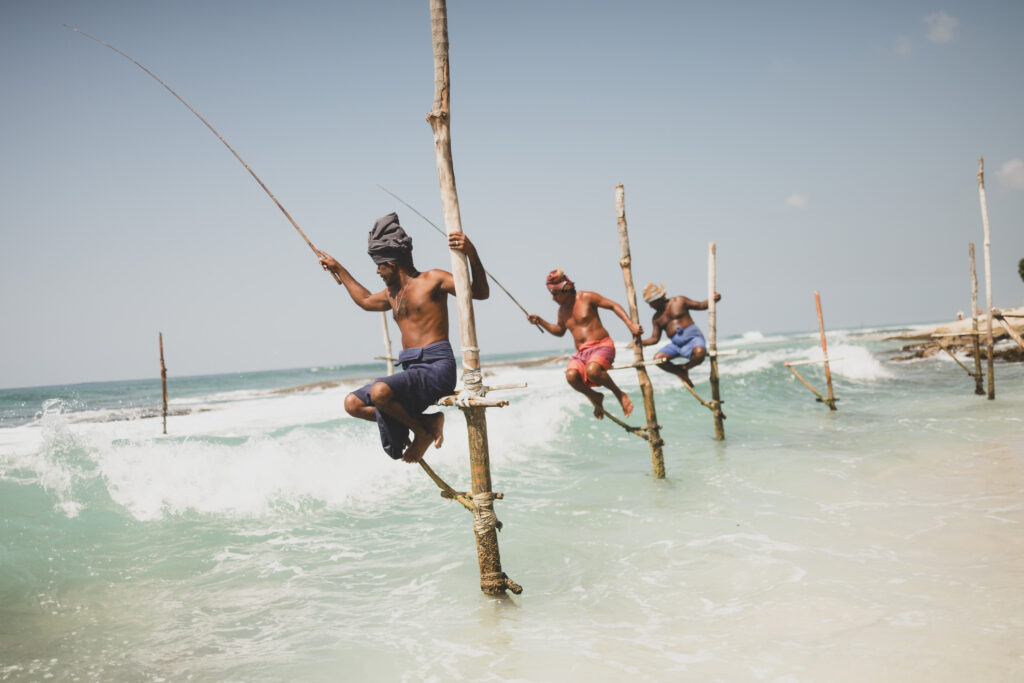
The day begins at the coast, where the fishing has already been going for hours. Stilt fishermen perched over the surf. Catamarans pulled up on the sand. Trawlers unloading. Dry fish laid out in the morning light. Naveen walks you through it not as a spectacle but as a livelihood — explaining what each method catches, what it earns, what it costs in hours and body and weather. By the time you leave the coast, you understand something about the fish on every menu in Galle that you didn’t understand before.
The children were fascinated. The stilt fishermen, in particular, stopped everyone in their tracks — including the 8-year-old, who had been largely indifferent to the morning until he saw a man balancing six feet above the ocean on a wooden pole with a rod in his hand.
Tea plantation
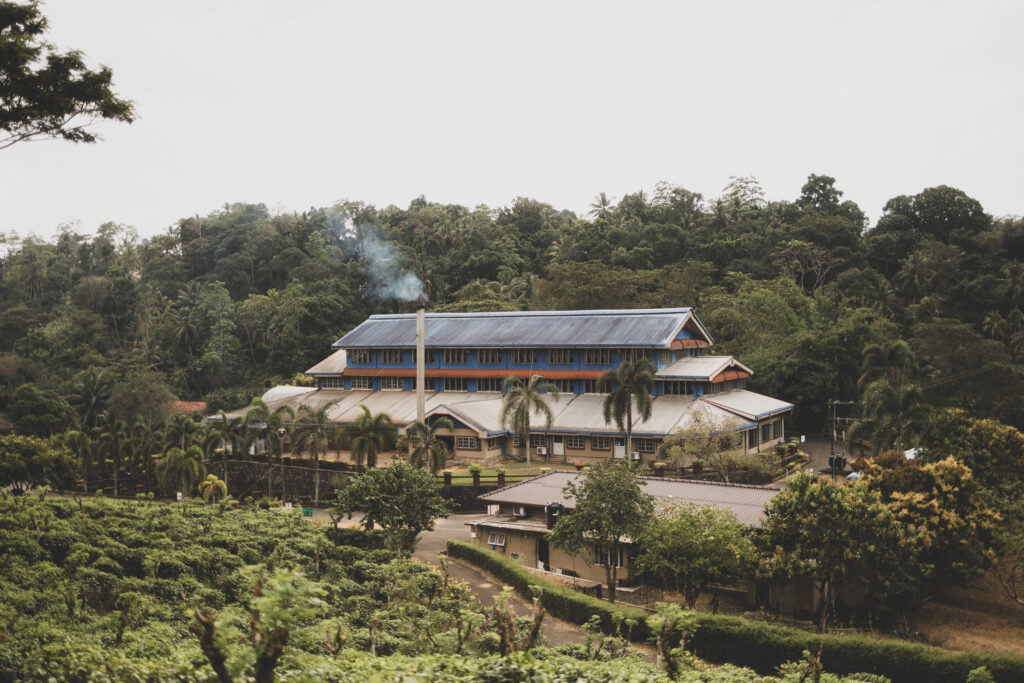
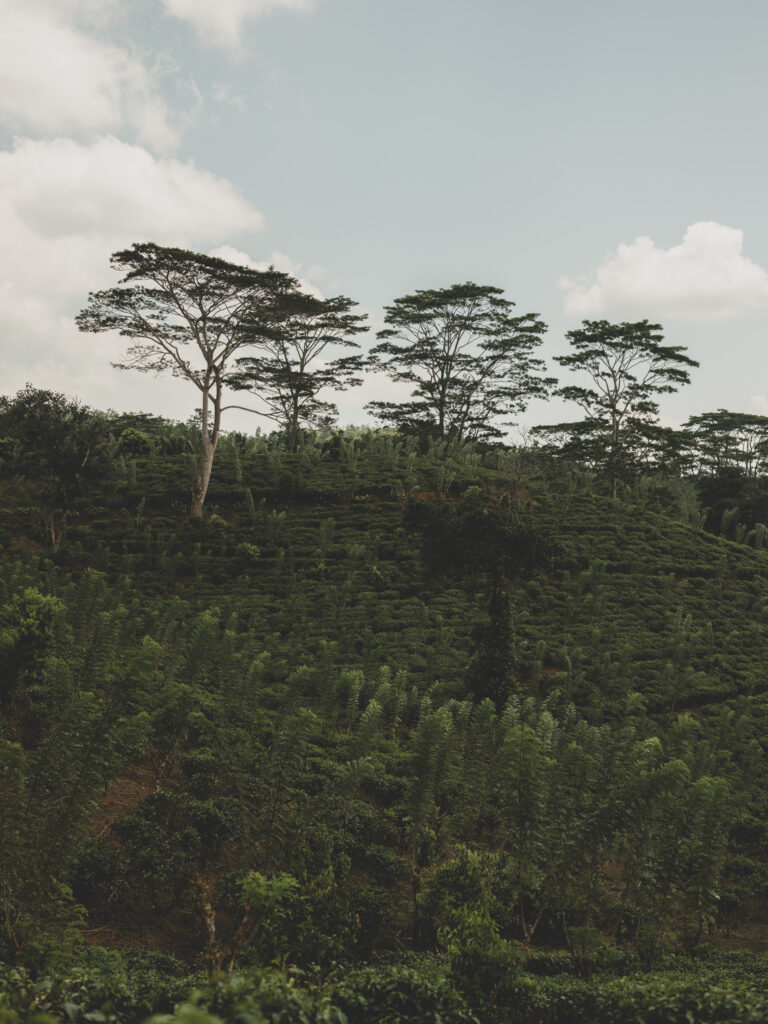
This is a low-country tea plantation — different in elevation and character from the famous hill-country estates — and the guided walk through it reframes everything you thought you knew about a cup of tea. Thirty-five varieties to taste.
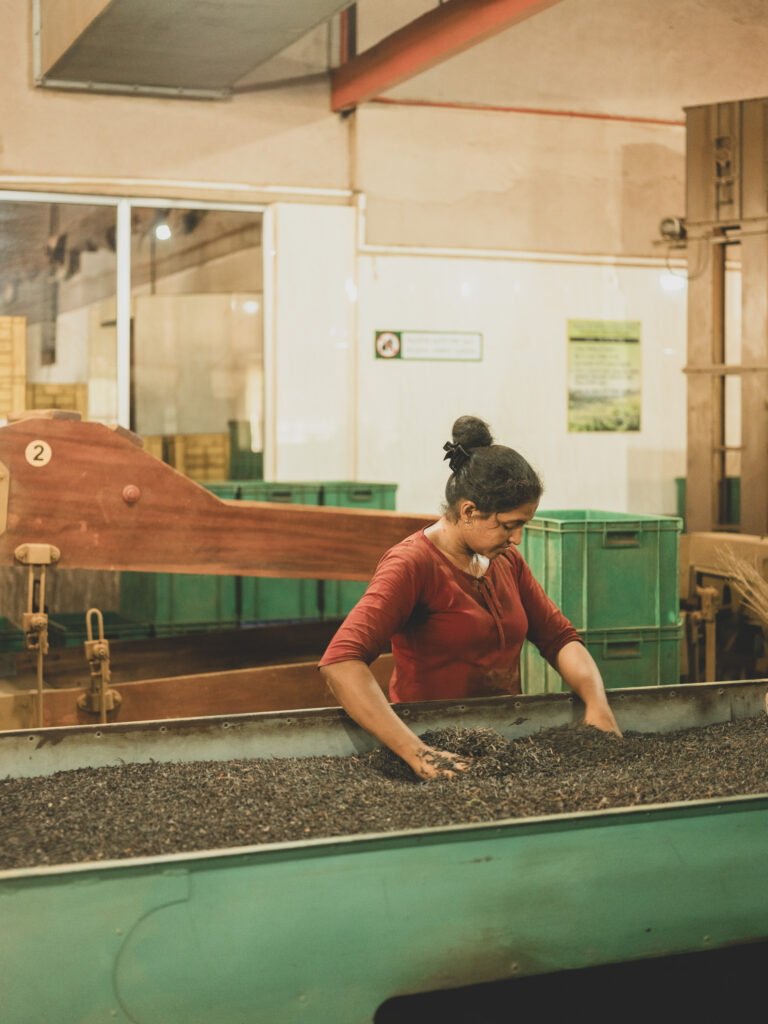
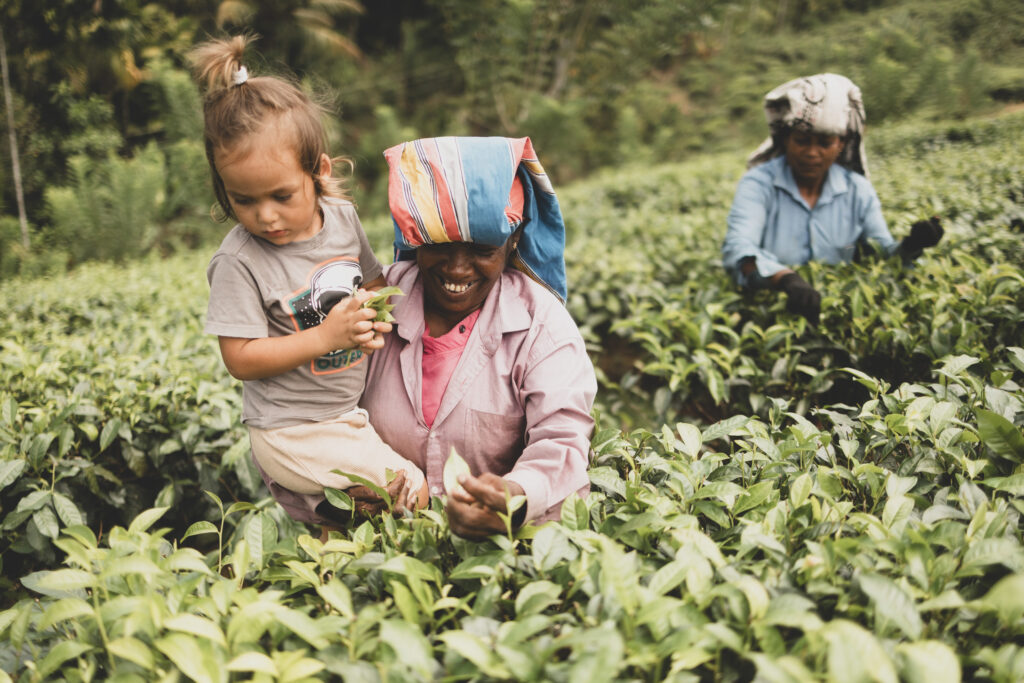
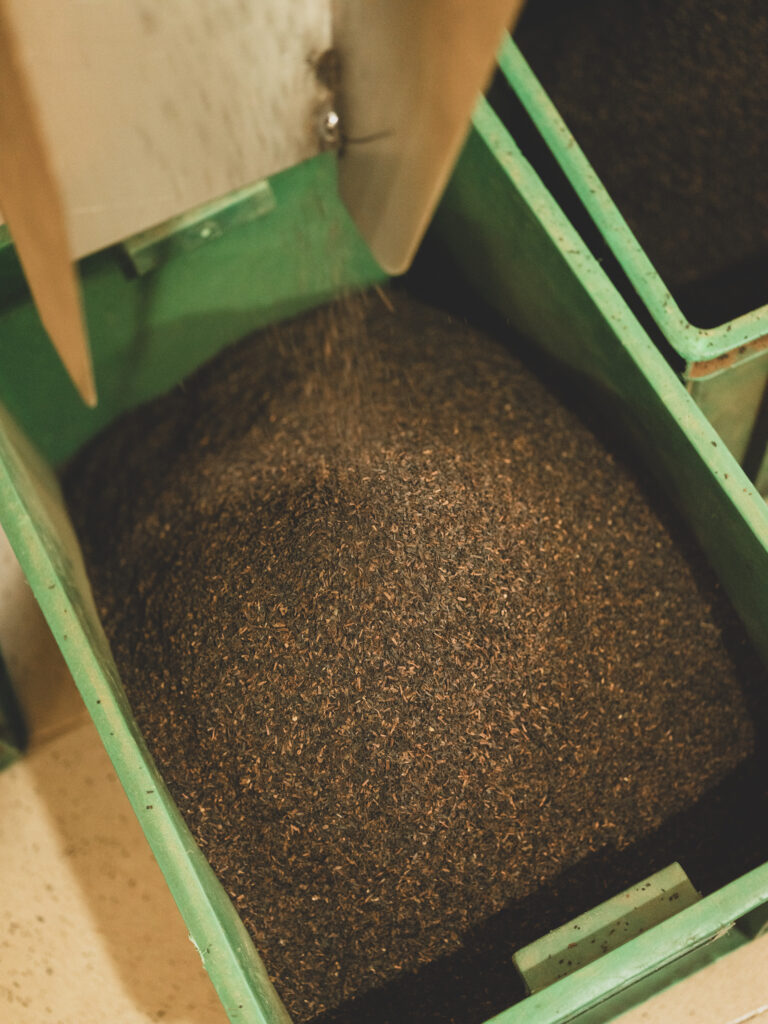
The walk is not staged. Everywhere people are actually working to bring you this nice cup of tea. Plugging the leaves. Drying in the factory. It is as real as it gets. No stagging, real work in an extremely hot environment.
Naveen will explain things you didn’t know to ask about. He carries a genuine warmth for the people you’ll meet — and that warmth is the thing that opens doors a standard tour never reaches.
What this is really about
The Donga Tours Koggala day is not a highlights reel. It is a coherent argument — made through fish and tea and cinnamon and lake water — about the way this coast actually works, and the people who keep it working. Naveen makes that argument not with a script but with his own knowledge, his own relationships, and a genuine desire for you to understand the place you are visiting.
We brought all four children. The youngest was 2. Not a moment of it was wrong for them — which is a higher compliment than it sounds, because most tours of this kind are designed for adults who can sustain two hours of context without needing a toilet, a snack or something to touch. This one moves, changes scene, puts things in your hands. It works for everyone.
Request experience
More from the magazine
Experiences · Rama Shala, Harumalgoda, Habaraduwa, SRI LANKA
The place we built so that families like ours would have somewhere to land.
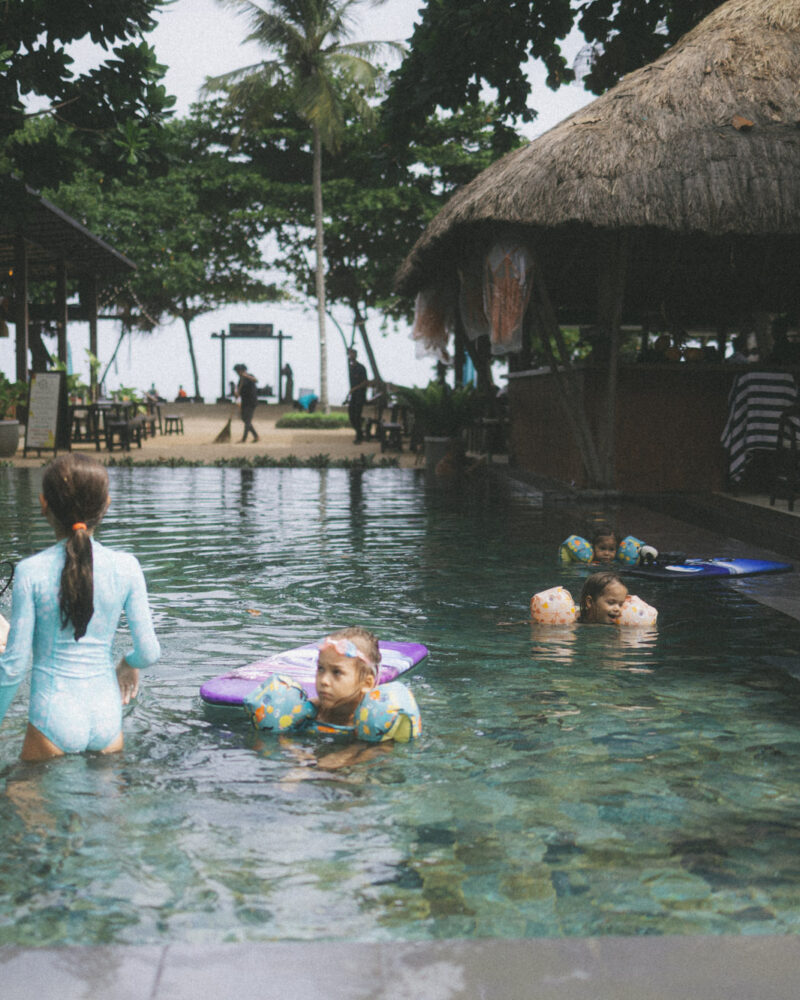
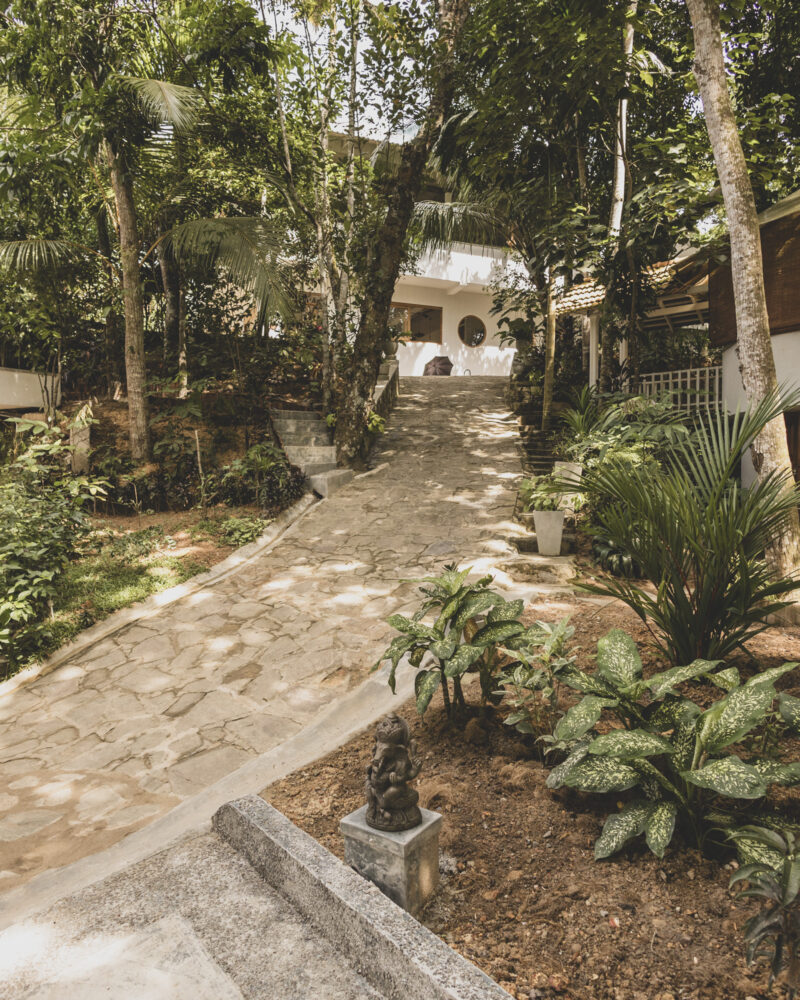
Rama Shala is where we live. It is also where we welcome families who want the same thing we wanted when we started travelling with children — a beautiful, unhurried place where the parents can breathe and the children can run.
Request experience
Stay · BANYAN CAMP, HAMBEGAMUWA, SRI LANKA
A floating deck under the banyan, where the lake does the parenting
Banyan Camp is reached on a road that does not behave like a road. It narrows, then forgets itself, then surrenders to a track of pale red earth that the rain has been arguing with for a decade. You park where a man tells you to park, which is under a tree, and you walk […]